
Acupuncture for Fertility
Updated: Oct 7
At Boise Acupuncture Co-op (BAC), our aim is always to meet you right where you are. We recognize that fertility is a complex biological process and there is no one “right way” to seek support while trying to get pregnant. We also acknowledge that you come to the clinic with your own experiences and a unique past which has led you to where you are today.
By partnering with you to support your overall health and well-being, we take a holistic approach to fertility that considers mind, body, emotions, and spirit. We hope acupuncture can become an accessible and helpful tool you can add to your toolkit alongside the rest of your support system and any other treatments you may be pursuing.
Here’s a little preview of what is to come in this article. Feel free to read the whole thing, or choose any of the below sections that feel relevant or helpful to you.
How acupuncture approaches fertility
So what exactly is acupuncture, and what does it do?
What training do BAC acupuncturists have?
Feedback from our community

How Acupuncture Approaches Fertility
One of my favorite things about acupuncture is how it views the body and human health as a reflection of the natural world around us. In this perspective, the body isn’t a machine with individual parts and processes that are isolated, monitored, and altered. Instead, the body is an interconnected, interdependent, and ever-changing ecosystem with an innate capacity to adapt, respond, and move towards balance.
Many patients find this to be an empowering perspective which shifts thinking away from pathology and focusing on what is “wrong” and towards a deeper connection to the body’s rhythms and patterns.
When you come in for acupuncture, we try to understand the root of where imbalance may have occurred and provide treatment that supports the health of your entire body to help you move closer to your goals. Acupuncture typically works cumulatively and requires consistent treatment over time to experience significant changes - more on treatment frequency below.
In Chinese medicine, there are hundreds of different patterns that may be playing a part in a patient’s overall picture. Acupuncture treatments are highly individualized according to these underlying patters; that means a treatment for one patient trying to get pregnant may look vastly different from another, even if they have the same medical diagnosis or are going through the same fertility treatment.
So what exactly is acupuncture, and what does it do?
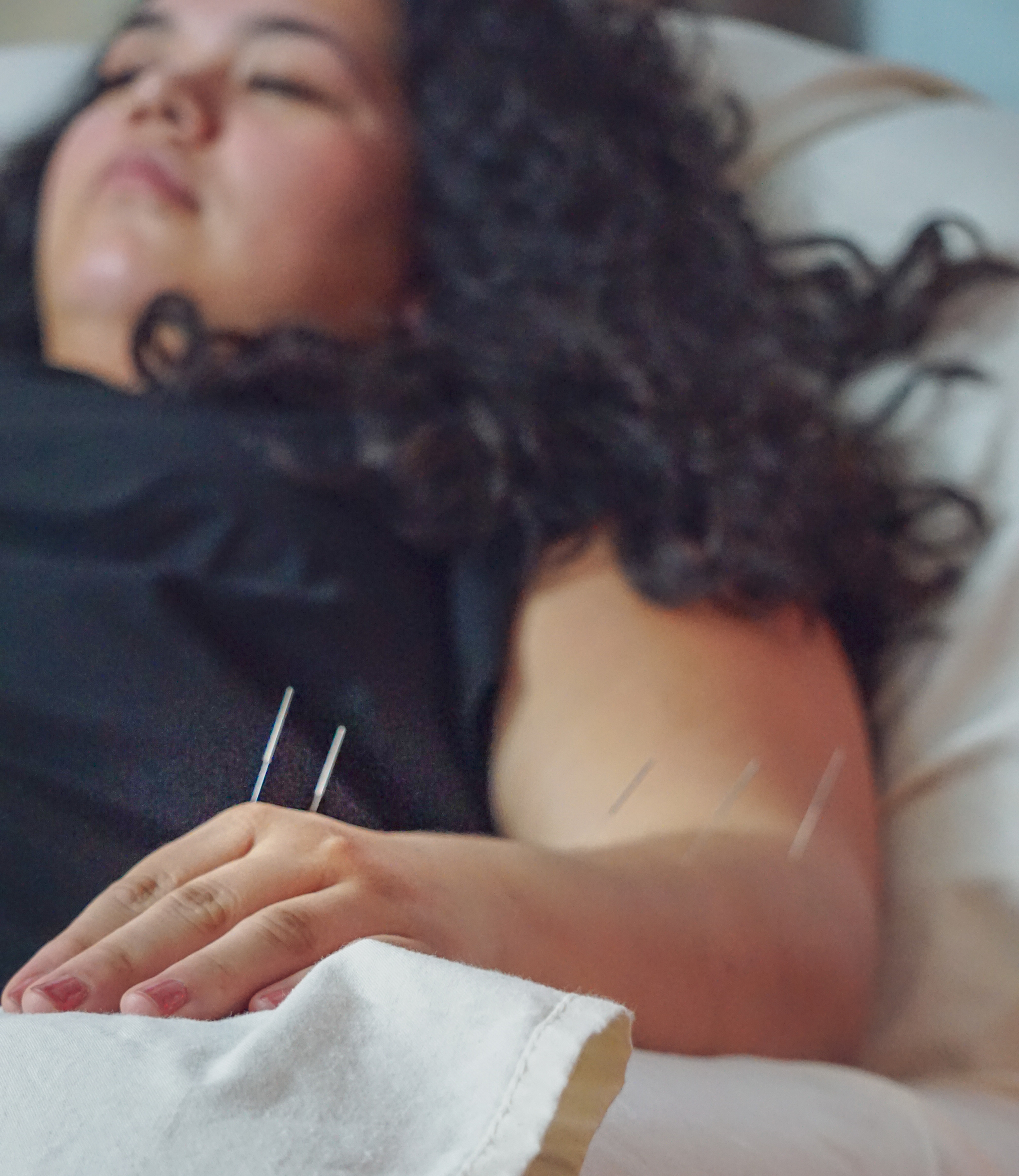
Acupuncture is a gentle, yet effective treatment involving the insertion of hair-thin, single-use, solid needles into specific points on the body. There is absolutely nothing in or on these needles, but nonetheless acupuncture has significant physiological effects. Studies have explored the role acupuncture plays in supporting many aspects of reproductive health and fertility, such as:
Calming the nervous system, lowering stress hormones such as cortisol, and improving sleep quality
Regulating hormones to encourage healthy menstrual cycles and ovulation
Decreasing inflammation in reproductive organs and reducing pain
Increasing circulation and blood flow to reproductive organs
Promoting healthy sperm quality, motility, and concentration
Providing support for depression, anxiety, grief, and other mental health struggles affected by hormonal changes and/or after pregnancy loss
Balancing the many changes throughout all stages of pregnancy and postpartum
At BAC, we respect the decisions you make for yourself and are here to support you whether you are working on regulating your cycles, wanting to get pregnant naturally, or hoping to use acupuncture as an integrative part of your broader fertility treatment.
Using Acupuncture Alongside Other Fertility Treatment
Many patients find out about BAC through their reproductive health clinics! Others hear about us through friends or family who found acupuncture to be helpful through their experience. Acupuncture is safe to use alongside fertility treatments and many patients find it to be a really important complement.
For some, going through fertility treatment can feel like a grind – it’s emotionally taxing, comes with troubling side effects, can be brutally expensive, and leave you feeling like your body is out of your control. Along with the benefits we went over above, acupuncture treatment offers a deeply relaxing and restorative experience that can give you a positive way to reconnect with your body during this time.
We have worked with patients who are going through fertility treatments such as: hormonal treatments, ovulation induction (OI), intrauterine insemination (IUI), in-vitro fertilization (IVF), frozen embryo transfer (FET), and surgical procedures.
What to Expect at BAC
At Boise Acupuncture Co-op our mission is to make acupuncture affordable and accessible for our community. One of the main ways we do this is by offering our services on no-questions-asked sliding scale, with prices at a fraction of the average cost of acupuncture in our area. It’s no secret that as soon as a service or product is marketed towards “fertility” or “pregnancy” price gouging is often afoot. Not at BAC. Our sliding-scale doesn't change based on why you're here or how often you're coming in.
At BAC, you’ll receive an individualized treatment from a licensed acupuncturist in our warm and personable community treatment room where many fully dressed people receive acupuncture care together in comfy recliners. We value being a welcoming place for everyone in our diverse community – we are proud to provide gender-inclusive, affirming, trauma-informed, and culturally responsive care. We are open seven days per week in the mornings, afternoons and evenings, making appointments widely available for our patients with busy schedules.
There is a ton of information about the clinic and what to expect on our website, so if you are interested in learning more please check it out at: www.boiseacucoop.com
What training do BAC acupuncturists have?
Licensed acupuncturists, like those of us at BAC, complete rigorous graduate-level training in acupuncture and Chinese medicine. This includes learning a comprehensive diagnostic system for understanding patterns in the body and how they relate to a person's symptoms, health history, and overall well-being. BAC's acupuncturists have been in practice for ten or more years and we’ve provided thousands of treatments for patients navigating reproductive health concerns.

Feedback from our community
“My midwife referred me to BAC my third trimester to assist with baby's positioning and labor prep. This was my first experience with acupuncture, and BAC made it simple, accessible (and not scary!) while still providing incredibly high quality care. It's such a warm, welcoming place - I feel SO cared for here, and the acupuncturists are all kind, attentive, and professional. I was planning on only going until baby is born, but I think I'll be a BAC fan for life" -Jess
“Acupuncture treatments helped me so much through both of my pregnancies. From helping get my body ready for pregnancy, to dealing with pain and keeping me comfortable, to managing the stress and anxiety that came with becoming a first-time parent and then a parent of two, BAC was such a crucial part of my care. Honestly, of all the prenatal appointments I had, I looked forward to my BAC ones the most. I always left feeling relaxed, supported, and stronger than when I arrived.” - Aislinn
How Often Should You Get Acupuncture?
This likely doesn’t come as a surprise, but acupuncture treatment frequency is not one-size-fits-all. How often you should get acupuncture depends on a lot of different factors, so it’s best to talk to your acupuncturist about frequency for your specific picture.
For many of the reproductive health challenges we see at the clinic, we recommend starting with acupuncture once per week for three months or more. We may suggest more frequent treatments at certain points in your cycle or fertility treatment, for example:
Irregular cycles, painful periods, or anovulation: we may recommend more treatments around mid-cycle or when pain or other symptoms increase
Fertility medications: more frequent treatment may help manage side effects
IVF or FET: we often recommend more acupuncture around the time of an embryo transfer, including the day before, day of, and/or day after
Stress, anxiety, or insomnia: when these symptoms significantly impact your quality of life, we often suggest more frequent treatment
We will work with you to find an acupuncture treatment plan that feels realistic for your life. Some patients seeking fertility support are already having a hard time juggling appointments, scheduling, commutes, and finances. The last thing we want is to add additional pressure to “do everything” and make acupuncture another source of stress for you.

Acupuncture During Pregnancy and Post-Partum
Acupuncture is also a tool many of our patients use throughout pregnancy and into postpartum. Your treatment will continue to be individualized as your body, symptoms, and needs change throughout all of the stages.
First trimester
Acupuncture can help to support some of the common symptoms that come along with rapid hormonal and physical changes such as fatigue, nausea and vomiting, digestive difficulties, loss of appetite, mood changes, and aches and pains.
Second & third trimesters
As your body adjusts to carry a growing baby, acupuncture can be used for low back pain, hip pain, round ligament pain, nerve pain, heartburn, sinus congestion, swelling, fatigue, insomnia, and other common discomforts.
Prepping for labor
As you get closer to your due date, we incorporate points used to prepare the body for labor and ease pain levels.
Complementary care for higher-risk pregnancies
Acupuncture is safe to be used alongside prenatal care when you're navigating complications during pregnancy such as high blood pressure, blood sugar imbalances, and autoimmune inflammation.
Postpartum
Acupuncture is a useful tool for many patients as they adjust to the hormonal, physical and emotional changes during postpartum such as lack of sleep, aches and pains, nightsweats, bowel and urinary symptoms, mental health struggles, and lactation support.
When your usual treatments are contraindicated
Pregnancy often means changing or stopping medications used to manage other conditions – acupuncture can be used to help you manage those symptoms during this time.

You Are Welcome Here
Fertility journeys often don’t follow a straight and predictable path and you don't have to have everything “figured out” before you come to BAC for support. Wherever you are on your path, our goal is to listen to your goals and offer a simple, restful, and effective tool to support your overall well-being along the way. We can't promise any particular outcomes, but we can promise that at BAC you will be treated with compassion, respect, and care.
Thank you for reading this introduction to acupuncture for fertility, we hope this article was helpful. Please check out our blog here for more acupuncture reads and follow us on Instagram @acupuncturecoop for more content.
If you are ready to get started with acupuncture treatment at BAC, click here to schedule your first appointment.
We hope to see you recliner-side soon!


